
Free written scope consultation - allowances, timeline, and change-order rules on paper before a single trade is scheduled
Sakrete Kitchen Remodeling: The Long Beach Owner’s Guide
We stock and install Sakrete-compatible kitchen remodeling products throughout Long Beach, with most full kitchen remodels running between $14,000 and $45,000 depending on scope. A typical Sakrete-based kitchen project in Long Beach takes four to eight weeks from demo to final inspection. Most homeowners discover they need this work when the existing substrate fails, tile cracks along a Sakrete bed, or a remodel starts and the contractor realizes the current underlayment won’t hold.
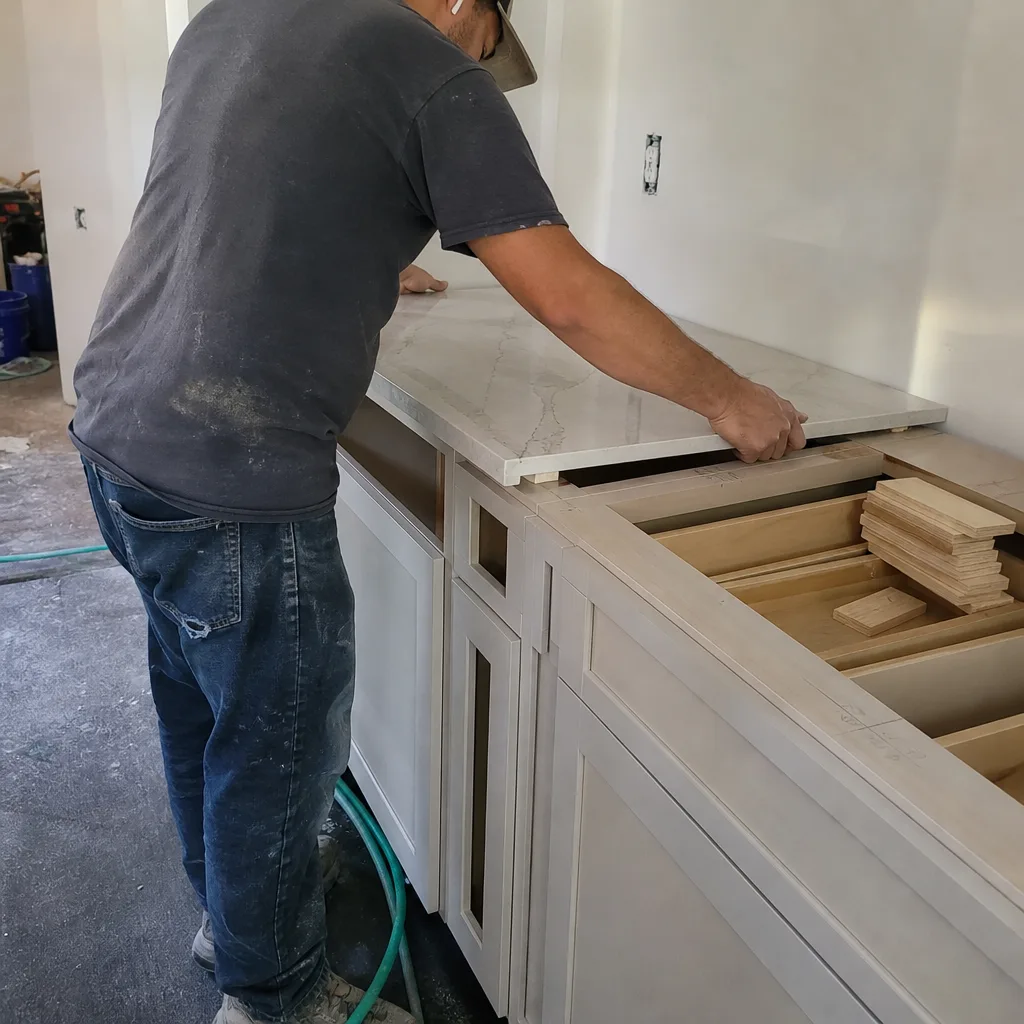
Sakrete isn’t a cabinet line or a countertop brand. It’s the concrete and mortar products that sit underneath your kitchen: floor leveler, thin-set mortar, sand mix for shower pans and kitchen transitions, and concrete resurfacer. When those products fail in a coastal climate like Long Beach, the tiles above them crack, the floors develop hollow spots, and grout lines pop loose. We’ve replaced failed Sakrete beds in kitchens from Belmont Shore to Bixby Knolls, and the failure pattern is almost always the same: moisture intrusion meeting a mix that wasn’t rated for the application.
Which Sakrete Models This Applies To
The Sakrete products we work with in kitchen remodels fall into a few specific lines. Sand Mix (typically 1101) is the standard for shower pans and kitchen floor mud beds. Floor Leveler (typically 1108) handles substrate correction before tile or vinyl goes down. Stone Veneer Mortar (3536) is for backsplashes and stone accents. Self-Leveling Underlayment (954) corrects wavy concrete slabs common in older Long Beach homes near the coast.
The important compatibility detail: Sakrete’s Sand Mix should not be used as a finished surface in a kitchen. It’s a bedding material, and it needs tile, stone, or another wear layer on top. We also flag the pot life on Sakrete’s rapid-set products in Long Beach’s warm months. When the temperature climbs past 85°F in July, a bag of rapid-set mortar can go from workable to stiff in under ten minutes. That’s faster than most homeowners expect, and it’s a common reason a weekend DIY kitchen floor job fails before the first tile is set.
For the OEM versus aftermarket decision: Sakrete is an Oldcastle APG brand, and most of their bagged goods are made in regional plants across the western U.S. Aftermarket equivalents exist, and some are fine. But for kitchen floors in a coastal environment, we stay with Sakrete or a direct equivalent like Mapei or Laticrete when the spec calls for it. The polymer content in the modified mortar matters more than the brand name on the bag. For Long Beach kitchens near the water, we specify polymer-modified thin-set with at least 25% latex solids. Regular dry-set mortar doesn’t hold up against the moisture and temperature swings we get within a mile of the shoreline.
Styles & brands we work with






Signs Your Sakrete Kitchen Remodeling Is Failing
- Hollow-sounding tiles underfoot. When you tap a floor tile and it sounds hollow, the mortar bed underneath has lost bond. In kitchens with Sakrete Sand Mix beds, this usually means the mix was too dry or the substrate flexed. The fix is pulling the tiles, re-skimming the bed, and resetting.
- Grout cracking along the counter-to-backsplash line. That joint fails when the counter and wall move at different rates. In Long Beach’s older pier-and-beam homes, this is common. The grout cracks because the substrate, often a Sakrete float or cement board, doesn’t have the flex the joint needs.
- Floor level changes at the kitchen threshold. If the floor dips more than a quarter inch over four feet, the original pour or leveler has shifted or settled. Sakrete Self-Leveling Underlayment is excellent, but if it was mixed too wet, it loses compressive strength and starts to crumble under a refrigerator or stove.
- Crumbling mortar in the backsplash grout lines. Sanded grout over unmodified mortar degrades when water hits it daily. In a kitchen with a pot-filler or a window above the sink, splash exposure is constant. The Sakrete mortar behind the tile is absorbing that moisture and slowly washing out.
- Persistent musty smell near the sink or dishwasher. Failed mortar beds trap water. If a dishwasher leaked once and the water wicked into a Sakrete bed, the bed holds that moisture for months. The smell comes from the substrate, not the surface, and cleaning the tile won’t fix it.
See the difference
 Before
 After
After Before
 After
After Before
 After
AfterReplacement Cost & What’s Included
In Long Beach, a full kitchen remodel built on corrected Sakrete substrates runs $14,000 to $45,000. The spread comes from what’s going on top: KraftMaid cabinets start around $4,000 installed; Cambria counters run $2,000 to $6,500; a full backsplash adds $800 to $2,500. The substrate work itself, the Sakrete floor bed, leveling, and membrane, typically lands between $1,800 and $4,500 depending on square footage and how much of the old bed has to come out.
Every price we write includes the same things: drop cloths laid before the first bag is opened, shoe covers at the door, debris removal, and a written scope with no change orders unless you ask for extra work. The price I write down on day one is the price on the invoice when we’re done. Elmstead Remodeling Long Beach is an independent service provider, not affiliated with Sakrete, but we stock their common kitchen products and know how their mixes behave in Long Beach homes.
Our 365-Day Done Right Promise applies to every kitchen project. If the grout cracks, the floor shifts, or the bed fails within a year of completion, we come back and make it right at no charge.
DIY or Call Us?
If you’re comfortable pulling a tile to see what’s underneath, that’s a safe inspection. Look for a white or gray mortar bed, check the thickness, and tap the surrounding tiles to hear how many sound hollow. That tells us a lot on the phone.
What we don’t recommend is mixing and pouring Sakrete self-leveler on a kitchen floor without checking the slab’s moisture content first. In Long Beach, slab moisture is the hidden variable. A calcium chloride test tells you in 72 hours whether your slab will bond with the leveler or reject it. Get that wrong and the new floor fails within a year. We do the test, we check the deflection, and we verify the bond before any pour. For a free estimate on Sakrete kitchen remodeling in Long Beach, call (562) 512-7086 and we’ll come look.
FAQs
A properly mixed and cured Sakrete Sand Mix bed under a kitchen floor should last 30 years or more. The failure we see locally comes from improper mixing ratios or moisture from slab issues, not the product aging out. If a bed fails before ten years, something in the installation or the slab underneath caused it.
In small areas, yes. If the hollow spot is under six square feet and the surrounding tile is stable, we can drill and inject a bonding epoxy without pulling the whole floor. Beyond that size, the repair becomes visible in the grout lines and we recommend a clean reset of the affected area. Either way, we’ll give you a written line-item quote before any work begins. Call (562) 512-7086 to schedule a look at it.
Most floor leveling and bed correction work takes one to two days including cure time with Sakrete rapid-set products. Standard sand mix beds need 24 to 48 hours before tile setting begins. Humidity in Long Beach’s summer slows cure times slightly; we factor that into the schedule from the start so you’re never waiting on us.
We keep Sakrete Sand Mix, Floor Leveler, and polymer-modified thin-set stocked on our trucks for Long Beach jobs, along with the primers and membranes that go underneath them. If your project calls for a specific Sakrete product we don’t carry that week, we pick it up same-day from our local supplier. We also work regularly with KraftMaid, Cambria, and Silestone products when the job moves from substrate to finish surfaces.
Written by Graham Stein, Owner, Elmstead Remodeling Long Beach at Elmstead Remodeling Long Beach, serving Long Beach and nearby areas.


