
Free written scope consultation - allowances, timeline, and change-order rules on paper before a single trade is scheduled
James Hardie Home Additions & ADU: The Long Beach Owner’s Guide
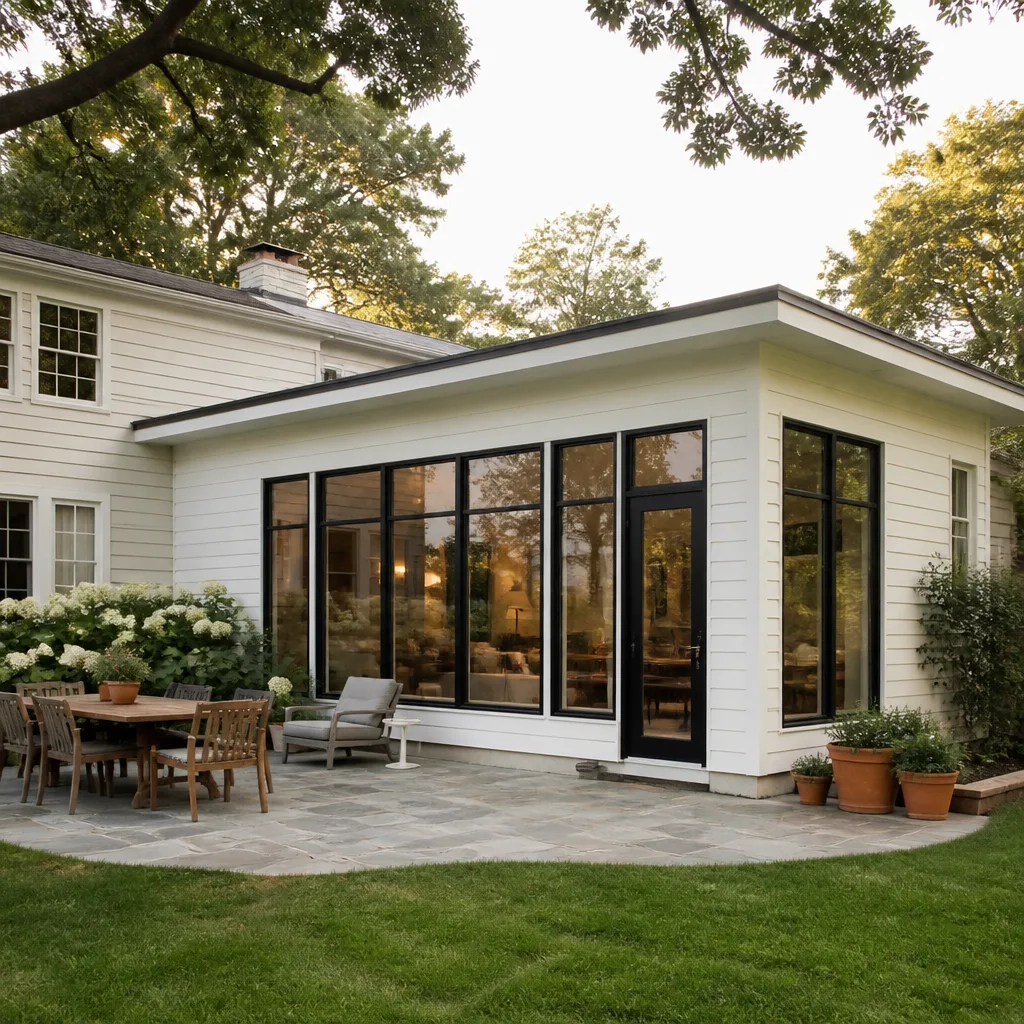
Adding square footage with James Hardie siding and trim on a home addition or ADU in Long Beach typically runs $45,000 to $130,000 installed, depending on size, foundation work, and whether you’re building up or out. We match new James Hardie lap siding, panel, and trim profiles to your existing home so the addition doesn’t read as an add-on, and we keep pricing written down before a single tool comes out of the truck. Most Long Beach homeowners call us after a re-roof or window replacement when they notice the Hardie siding near the roofline or window flashing has started to cup, crack, or pull away at the seams.
What you’re reading is the page I’d want if I were in your shoes: a straight answer on what it costs, which Hardie products fit what you already have, and how to tell if what you’re seeing is normal wear or a real problem. We’re an independent remodeling contractor in Long Beach, not affiliated with James Hardie, but Hardie is a brand we specify by name because the warranties travel with the finished project and we can stand behind the installation.
Key Takeaways
- Long Beach home addition and ADU projects with James Hardie exteriors run $45,000 – $130,000 installed.
- Hardie plank lap siding, HardiePanel vertical siding, and HardieTrim boards each have different exposure profiles and joint requirements; mixing them wrong is the most common failure we fix.
- James Hardie products carry a 30-year non-prorated substrate warranty when installed to the manufacturer’s spec and using the right flashing details.
- We write the price before work starts, every time, and it doesn’t change once the crew arrives.
- We match new Hardie product to your existing color and texture, and we can show you a photo of the clean-up before we leave.
Styles & brands we work with






Which James Hardie Models This Applies To
James Hardie makes three product families that show up on Long Beach additions and ADUs: HardiePlank lap siding (horizontal boards, usually 8.25-inch exposure), HardiePanel vertical siding (4×8 or 4×10 sheets, used for board-and-batten or smooth modern looks), and HardieTrim boards (used at corners, windows, doors, and fascia). Within each family there are texture options: smooth, cedar-grain, and, on some profiles, stucco. The compatibility gotcha we see most often in Long Beach is when a homeowner or a previous contractor mixed the wrong trim profile with the plank’s mounting block, leaving an exposed cut edge that wicks moisture and fails within a few seasons in our marine air.
If you don’t know what’s on your house, check the back of a loose board or an off-cut in the garage; Hardie products are stamped with “JH” and a production code, and the color name and profile width are usually printed on the packaging from the original install. If you have no off-cuts, measure the exposure: 4-inch, 6-inch, or 8.25-inch lap reveals point to HardiePlank. If you see vertical sheets with a smooth or panelized face, it’s HardiePanel. The OEM-vs-aftermarket decision here is easy: we use genuine James Hardie for siding and trim on additions and ADUs because the material warranty is tied to the manufacturer and because the color-match guarantee is cleaner with genuine product. For caulks, sealants, and flashing, we use OEM-compatible products from Sika, OSI, and GAF, which we also stock for roof tie-ins.
Signs Your James Hardie Home Additions & ADU Is Failing
- Cupping or warping at board ends. This almost always points to missing or failed flashing at the butt joints. Hardie board ends are the first place moisture enters, and in Long Beach’s coastal humidity, a cupped board end means water is already behind the siding.
- Visible nail heads or nails that have pulled through the board face. Hardie is cementitious; when a nail is over-driven or placed too close to the board edge, the board eventually cracks around the fastener. Wind pressure near the coast accelerates this.
- Chalky residue or brittle, falling-off caulk at the trim joints. The caulk line that seals HardieTrim at corners and window openings has a realistic service life of 5 – 8 years in Long Beach sun; when it fails, the exposed seam begins to separate and the trim warps.
- Dark staining or soft spots at the bottom edge of the siding where it meets the foundation or a deck ledger. Hardie requires a 6-inch minimum clearance from grade and proper kickout flashing at roof-to-wall intersections. When that clearance isn’t maintained, the bottom course absorbs moisture and fails from the bottom up.
- You can see light or feel a gap where the addition meets the original house. This is a structural tie-in issue, not just a siding issue. The transition between the original wall and the new Hardie plane has to be flashed and sealed properly, or the gap will grow with every thermal cycle.
See the difference
 Before
 After
After Before
 After
After Before
 After
AfterReplacement Cost & What’s Included
Installed pricing for a Long Beach home addition or ADU with a James Hardie exterior generally lands between $45,000 and $130,000. The range is driven by three things: the size of the addition in square feet, whether the project requires foundation work or structural changes (most do), and the Hardie profile and texture you choose. A 400-square-foot bump-out with matched HardiePlank lap siding sits at the lower end; a fully finished ADU with board-and-batten HardiePanel, HardieTrim, and a new roofline sits at the upper end. Every quote from us includes the written scope of work, the named James Hardie products and colors, the flashing and weather-resistive barrier detail, and the clean-up. The 365-Day Done Right Promise applies to the entire project: if it’s not done right after the job is complete, we make it right. No estimate that grows after the crew arrives. Graham Stein’s signature line on this is simple: “The price I write down on day one is the price on the invoice when we’re done.”
DIY or Call Us?
What you can safely check yourself: whether the caulk lines at trim joints are cracked, whether any board ends are cupped or lifting, and whether the bottom course of siding has the required 6 inches of clearance from the ground. Those are observations, not repairs. What you should not attempt to do yourself is remove, cut, or re-install cementitious Hardie board on an occupied wall: the dust is silica-bearing and requires respiratory protection, the cuts require a specific blade, and an improper re-install at the butts and flashing will void the material warranty and fail again in a season. If you’re considering a home addition or ADU with a Hardie exterior in Long Beach, the conversation should start with a phone call, not a Sawzall. Call us at (562) 512-7086 and we’ll walk through what’s failing, what it costs to fix, and whether a repair or a full re-side makes sense for your home.
FAQs
James Hardie siding carries a 30-year non-prorated substrate warranty when installed to the manufacturer’s written installation spec, and in Long Beach’s coastal climate we routinely see properly installed Hardie last 25 – 30 years before homeowners choose to re-side for aesthetics rather than failure. The lifespan hinges on flashing, caulk maintenance, and ground clearance. If you’re seeing cupping or staining, call us at (562) 512-7086 for an honest read on whether it’s a fix or a re-side.
In most cases, individual boards or a single trim run can be replaced without removing the entire wall, as long as the underlying weather-resistive barrier and flashing are still intact and the replacement board is color-matched to the existing Hardie product. We do this often on Long Beach additions where one board at a butt joint failed. If the flashing or barrier has been compromised behind multiple courses, a larger repair is the honest answer. Call (562) 512-7086 and we’ll tell you which one you’re looking at.
A siding-and-trim re-side on a 400 – 600 square foot addition usually takes our two-person crew 6 – 10 working days once materials are on site and any framing or flashing correction work is complete. A full ADU, from foundation to final paint, typically runs 3 – 6 months depending on permitting and inspections. We keep the same crew on the job from day one to the last day, because the people who framed the walls are the people who should be flashing them.
We order genuine James Hardie siding, panel, and trim for each project by name and color, and we keep a small stock of common trim profiles, flashing materials, sealants, and touch-up paint in our Long Beach shop so a small repair doesn’t wait on a supplier’s lead time. For larger additions and ADUs, we order direct and staged delivery to keep the site clean and the schedule predictable. If you’re not sure what you need, call (562) 512-7086 and we’ll identify the profile and color from photos or an on-site visit.
Written by Graham Stein, Owner, Elmstead Remodeling Long Beach at Elmstead Remodeling Long Beach, serving Long Beach and nearby areas.


