
Free written scope consultation - allowances, timeline, and change-order rules on paper before a single trade is scheduled
James Hardie Kitchen Remodeling: The Long Beach Owner’s Guide
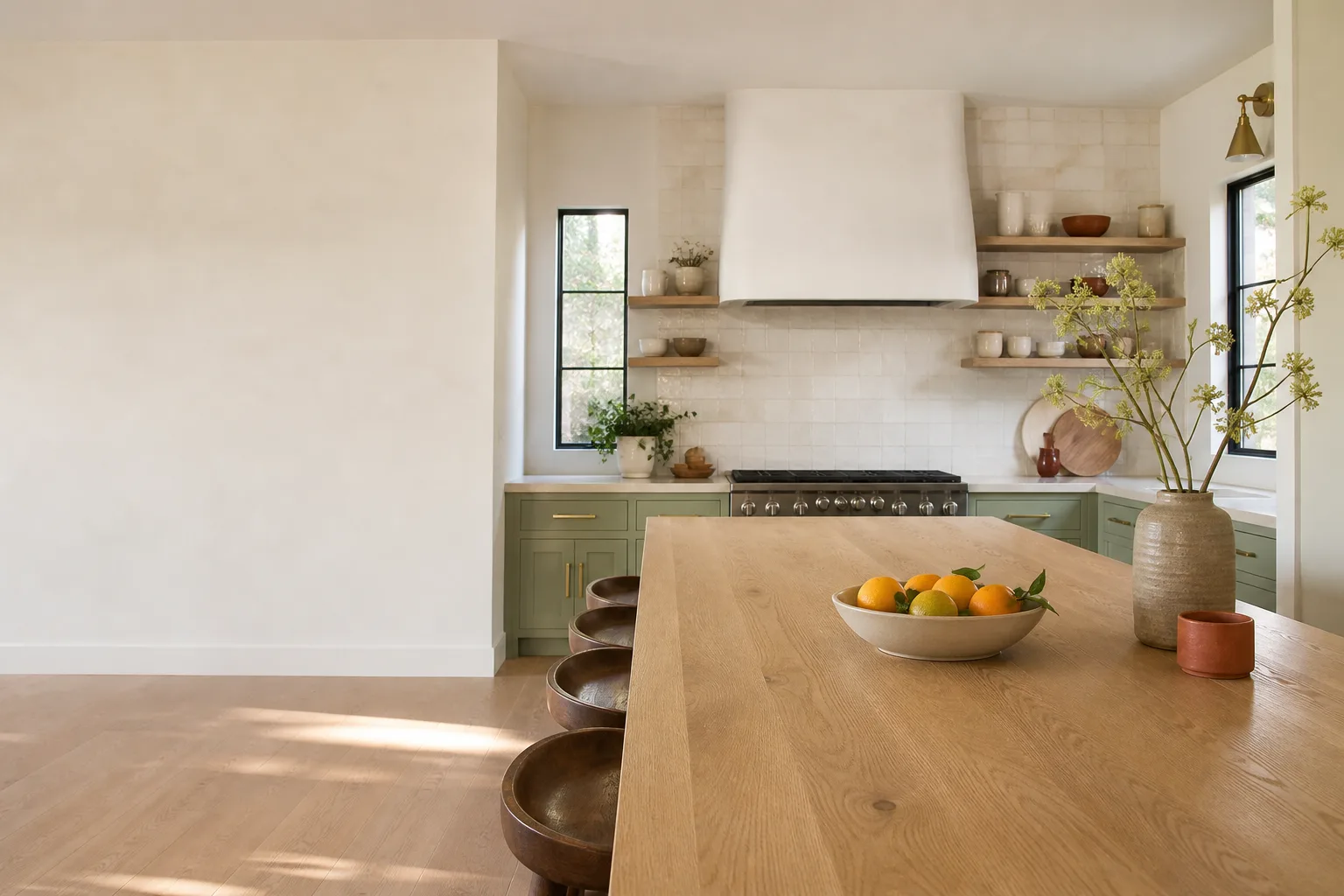
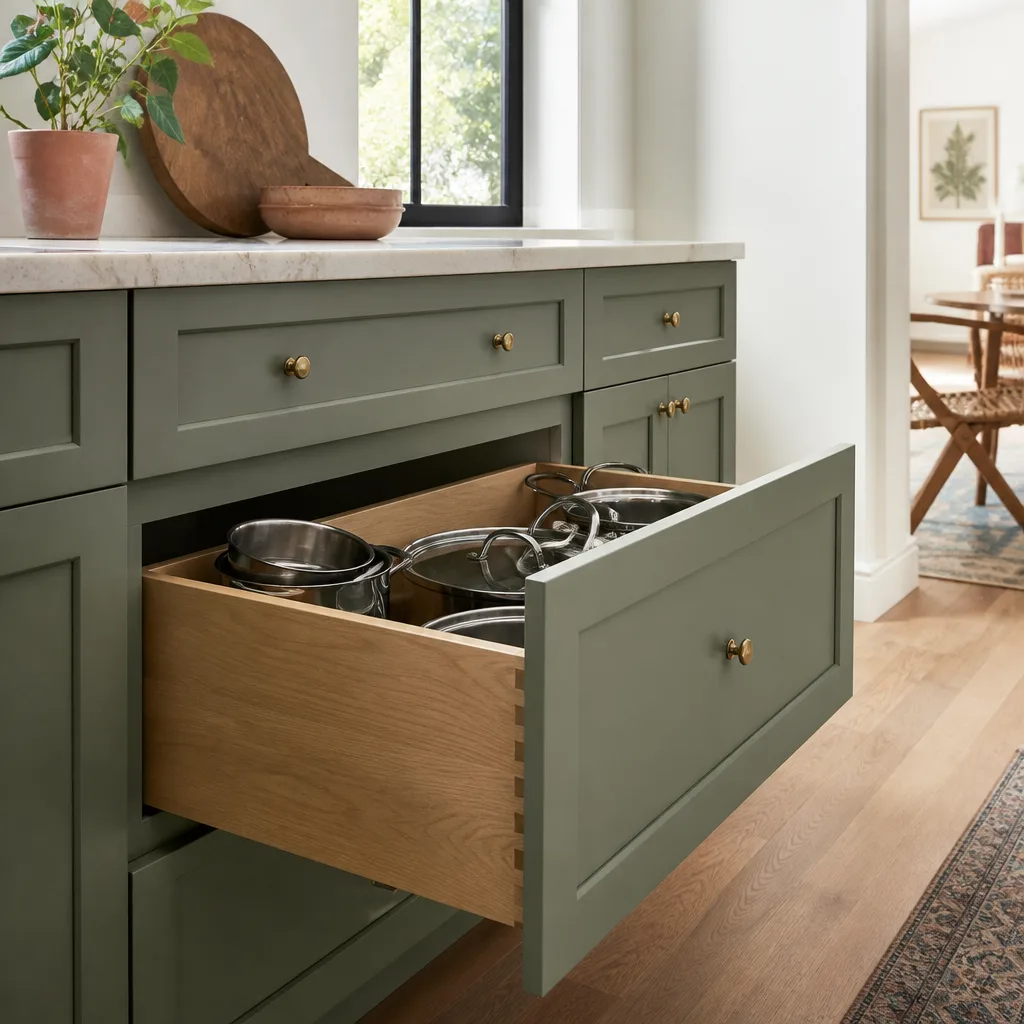
A full James Hardie kitchen remodel in Long Beach typically runs $14,000 – $45,000 installed, depending on whether you’re replacing cabinet fronts, countertops, and backsplash or gutting the room to the studs. We stock and install James Hardie-compatible trim, panel, and backsplash products, and we can have a written price in your hands before any material gets ordered. Most Long Beach homeowners call us after they’ve noticed one specific thing: swelling at the bottom edge of a cabinet back panel, cracking in a HardieBacker seam behind the sink, or water staining where the backsplash meets the counter.
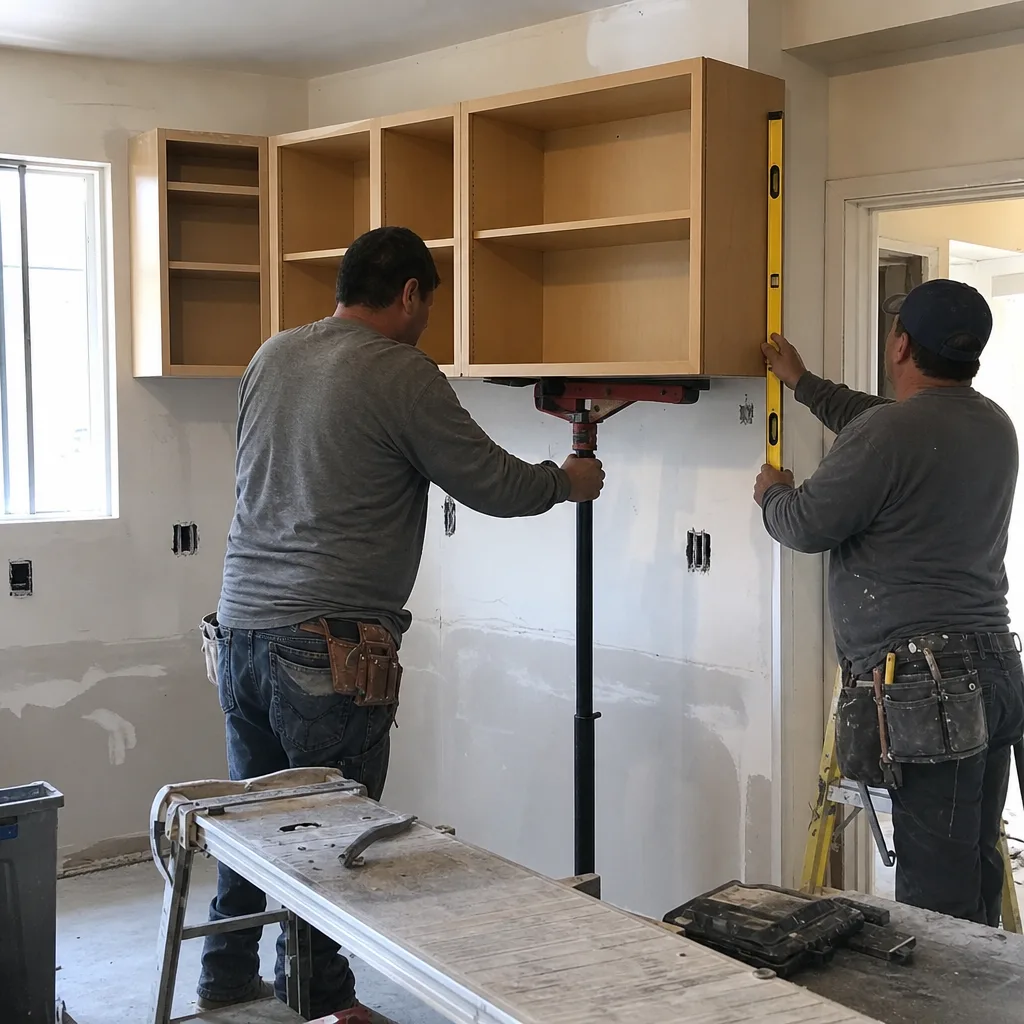
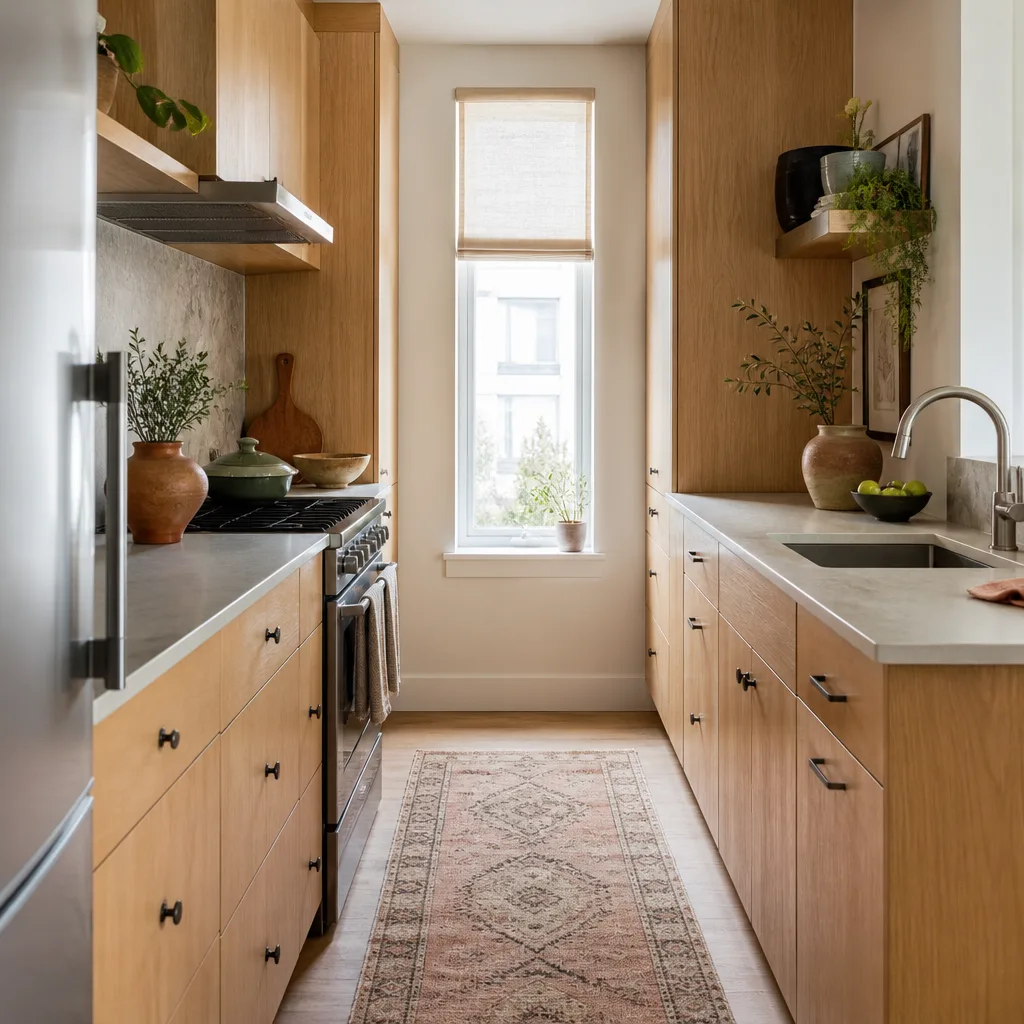
The written price I give you on day one is the price on the invoice when we’re done. That’s how we’ve always run jobs, from small galley kitchens in Belmont Shore to full gut-outs in Bixby Knolls, and it’s the same promise on a $14,000 refresh or a $45,000 full remodel.
Which James Hardie Models This Applies To
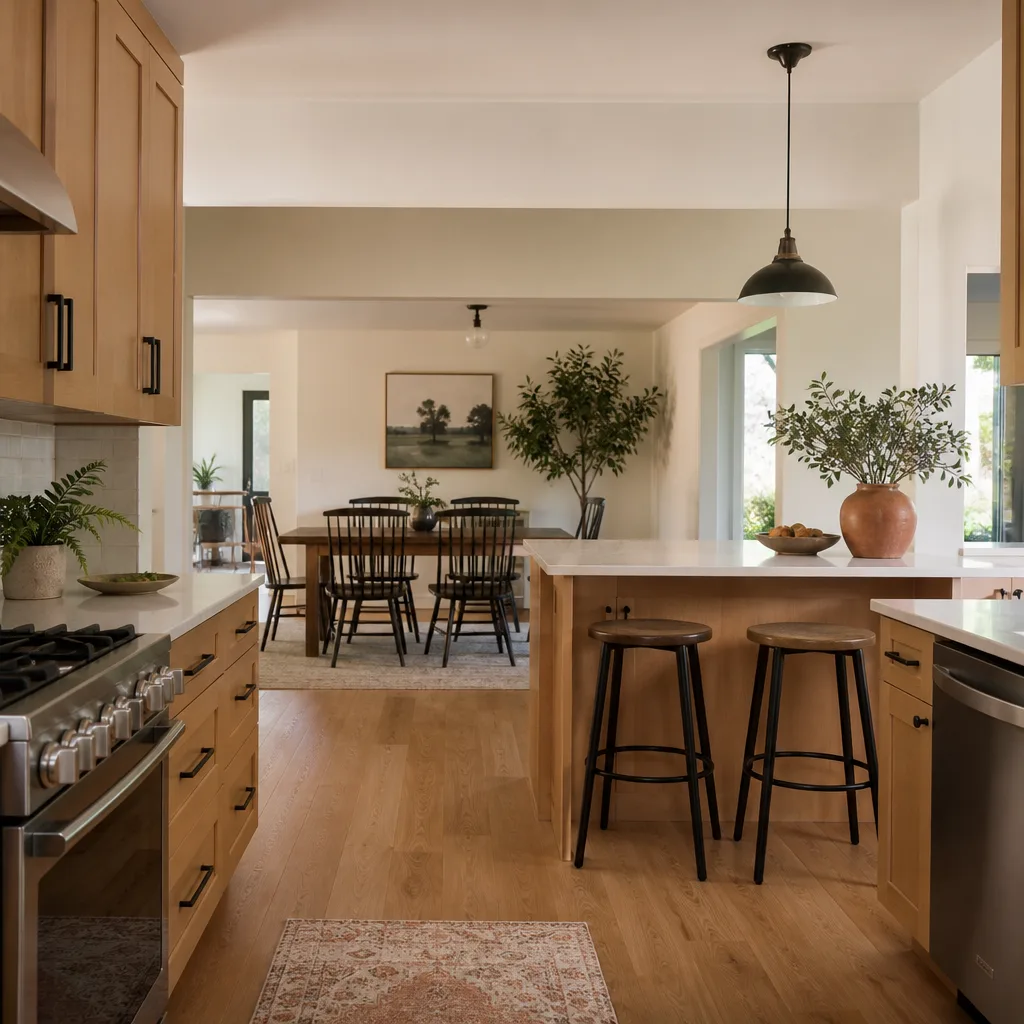
James Hardie makes three products that show up routinely in Long Beach kitchens: HardieBacker cement board (the 1/4-inch and 1/2-inch panels used as tile underlayment behind backsplashes and under countertops), HardiePanel vertical siding (sometimes used on kitchen exteriors or as a decorative interior wall panel), and HardieTrim boards (used where a kitchen addition ties into the original house).
The compatibility gotcha most owners run into is thickness. HardieBacker comes in 1/4-inch for floors and countertop underlayment, and 1/2-inch for walls. If the original installer used 1/4-inch behind a backsplash and you want a heavier natural stone tile, the board has to come out and get swapped for 1/2-inch. We measure the exposed edge at the sink cutout or behind the stove before we quote anything. For OEM versus aftermarket: HardieBacker is the original, and we use it exclusively behind tile because the 5-year limited warranty on the board matters when a seam fails from water intrusion. There are cheaper cement boards, but they don’t hold a screw the same way at panel edges, and in humid Long Beach summers that’s where failures start. We’re an independent remodeling contractor, not affiliated with James Hardie, but we spec their board by name because we’ve pulled enough failed generic panels out of walls to know the difference.
Styles & brands we work with






Signs Your James Hardie Kitchen Remodeling Is Failing
- Swollen or soft spots at the bottom of cabinet backs. Water has been wicking up behind the HardieBacker from a sink splash or dishwasher leak. The board itself may be fine, but the cabinet box behind it is absorbing moisture.
- Grout cracks running horizontally along the backsplash, about 18 inches off the counter. This is the seam line where two HardieBacker panels meet. Without fiberglass tape and thinset across that seam, the panels flex independently and the grout fails.
- Tile movement when you press on it. HardieBacker that wasn’t screwed on the 8-inch grid pattern will flex under hand pressure. That movement eventually pops tiles loose.
- Dark staining at the counter-to-backsplash joint. The silicone caulk has failed and water is sitting against the raw board edge. The board edge wicks like a sponge and feeds mold behind the tile.
- Crumbling board edges visible under the sink cabinet. This is usually from a slow P-trap drip that went unnoticed for months. Cement board doesn’t rot, but it does break down when submerged long-term.
See the difference
 Before
 After
After Before
 After
After Before
 After
AfterReplacement Cost & What’s Included
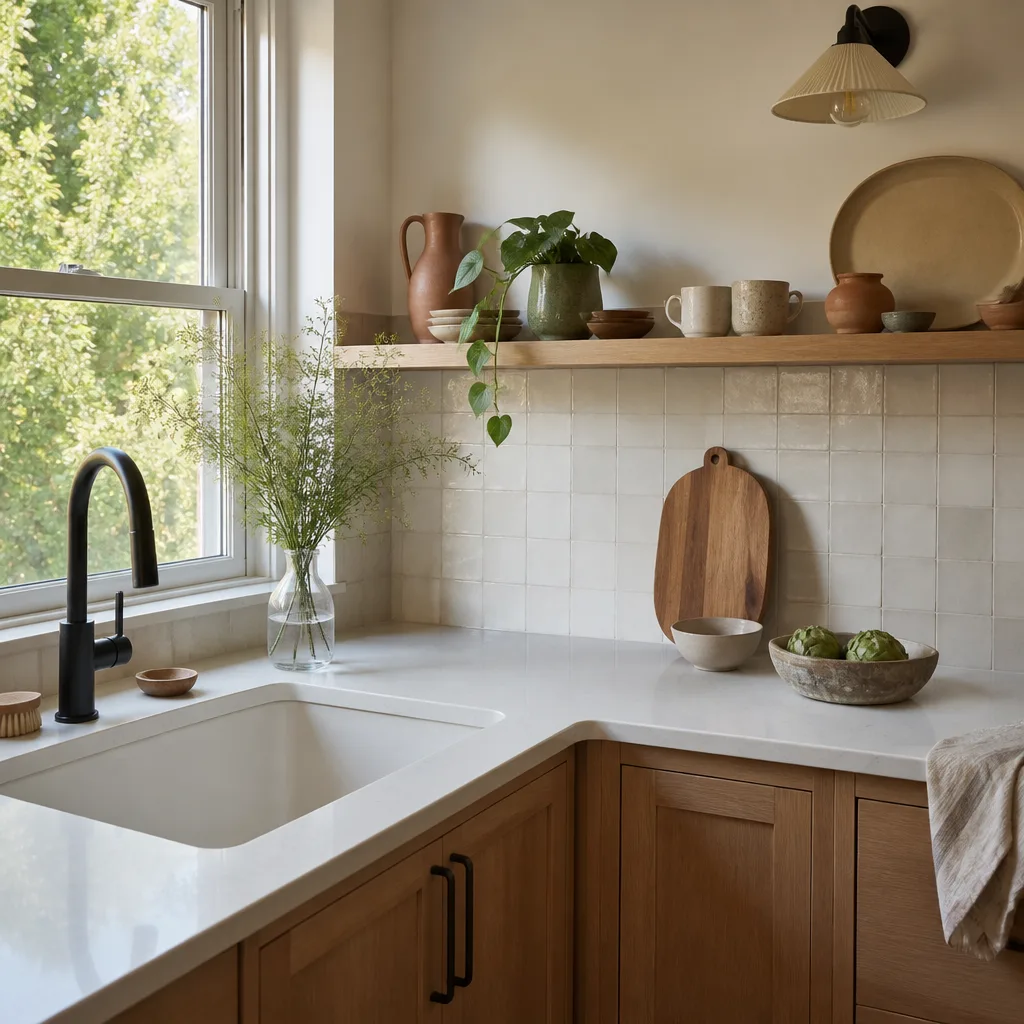
In Long Beach, the range breaks down by project scope:
- Backsplash replacement (including new HardieBacker, tile, grout, and silicone): $800 – $2,500
- Countertop replacement with new HardieBacker underlayment: $2,000 – $6,500
- Partial kitchen remodel (cabinets, counter, backsplash as one scope): $14,000 – $25,000
- Full kitchen remodel down to studs: $25,000 – $45,000
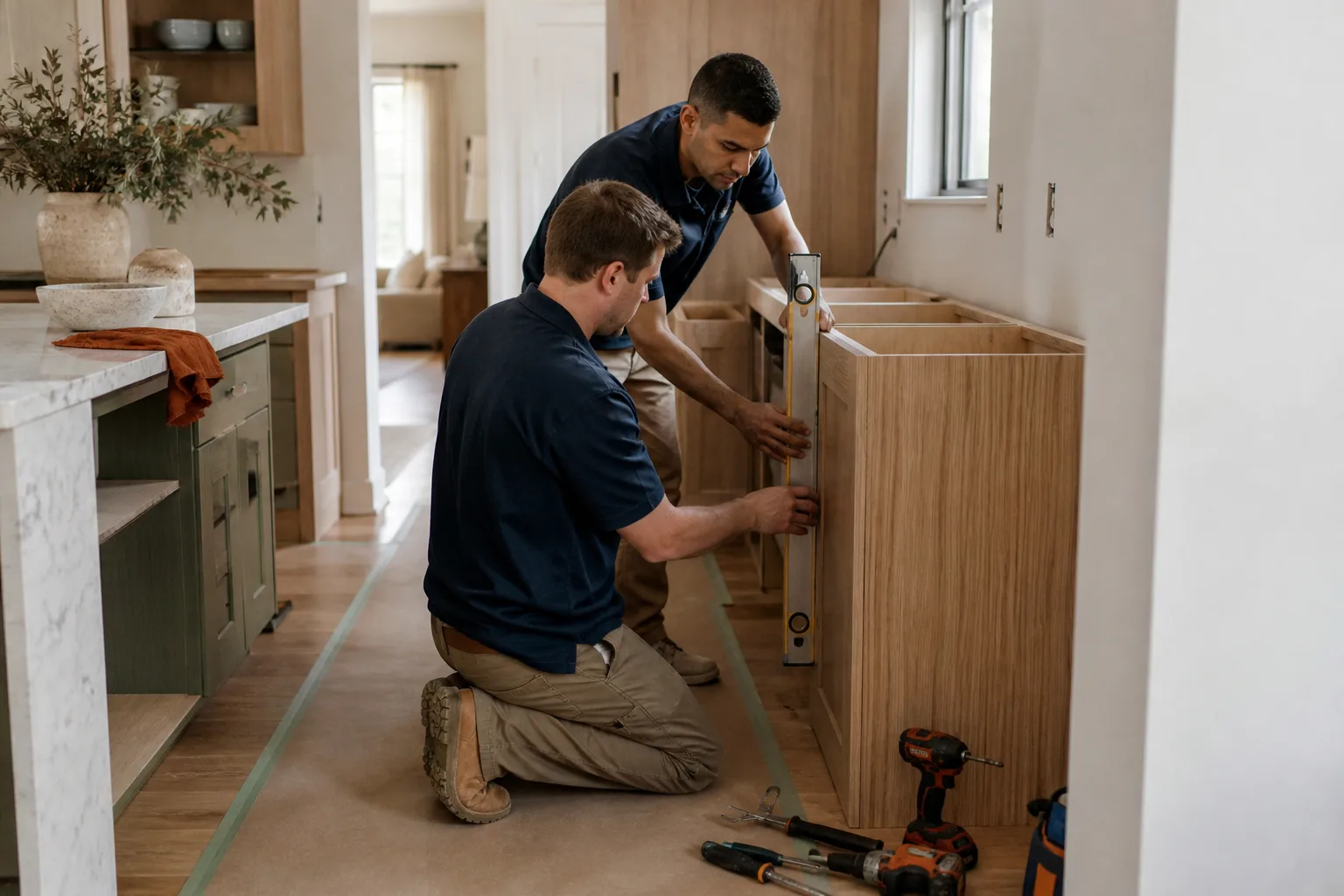
What moves the number: linear feet of backsplash, cabinet count, whether the existing HardieBacker stays or gets pulled, countertop material (Cambria and Silestone quartz run higher than laminate or basic granite), and whether we’re matching an existing tile pattern or starting fresh. Every quote includes the demolition, the board, the tile, the finish work, the drop cloths, the shoe covers, and the photo of the clean-up before we leave. There are no change orders for standard scope once the written price is set.
DIY or Call Us?
A homeowner can safely check a few things before calling. Look under the sink with a flashlight for staining at the board edge. Press on the backsplash tile with a thumb and watch for movement. Check the grout lines for cracks at exactly the seams. If any of those three things show a problem, the fix involves pulling tile, removing the old HardieBacker, and reinstalling with the correct screw pattern and seam taping. That’s not a weekend job. Done wrong, you’ll be looking at the same failure in eighteen months, plus water damage in the cabinet boxes. Call (562) 512-7086 and we’ll send someone to look. The estimate is free, the written price is the written price, and you get to decide from there.
FAQs
Installed correctly with sealed seams and a proper screw pattern, HardieBacker lasts 30+ years in a Long Beach kitchen. The board itself carries a 5-year limited warranty from James Hardie, but the real variable is water management. A board behind a properly caulked backsplash and a sealed countertop edge will outlast the tile on top of it. Boards that fail early in Long Beach fail from water intrusion at seams or edges, not from age.
Small areas of cracked board behind a backsplash can occasionally be patched if the damage is at one panel corner and the surrounding board is still solidly screwed to the studs. But a seam that has flexed long enough to crack grout has usually loosened the board across that entire panel. In our experience, partial repairs hold for a season and then the crack returns. For a permanent fix, the full panel comes out. Call (562) 512-7086 for a free estimate, and we’ll tell you honestly which one you’re dealing with.
Most backsplash replacements in Long Beach run two to three working days. Day one is demolition and HardieBacker installation with seam taping. Day two is tile setting. Day three is grout, silicone, and the clean-up photo. If the counter edge needs to be prepped or the cabinet boxes show water damage, add a day. We schedule around family hours, use quiet tools where possible, and keep the same two-person crew on the job from start to finish.
Yes. Our crews carry 1/4-inch and 1/2-inch HardieBacker panels, seam tape, and the correct screws on standard kitchen jobs. That means we can start the board work the day the written price is approved, without a supply-house run. We also keep matching tile profiles and silicone in stock for the finish. For larger full-panel replacements, we order exact counts from our Long Beach supplier the day the contract is signed.
Written by Graham Stein, Owner, Elmstead Remodeling Long Beach at Elmstead Remodeling Long Beach, serving Long Beach and nearby areas.
Ready to price the fix? Call (562) 512-7086 for a free estimate. Live person answers, 24/7. No voicemail, no bot. Elmstead Remodeling Long Beach is an independent service provider working with named-brand materials including James Hardie, KraftMaid, Cambria, and Silestone.


