
Free written scope consultation - allowances, timeline, and change-order rules on paper before a single trade is scheduled
Unilock Fence Installation: The Long Beach Owner’s Guide
Unilock fence installation in Long Beach typically runs $3,500 to $9,000 for a complete fence with concrete base panels and aluminum or vinyl infill, depending on linear footage, soil prep, and panel height. If you already own the Unilock product and need a section replaced or a gate rebuilt, the parts-plus-labor cost usually lands between $1,200 and $3,800. We stock Unilock-compatible fence posts, base panels, and gate hardware, and we can schedule a site visit to measure and match your existing layout before quoting a written price.
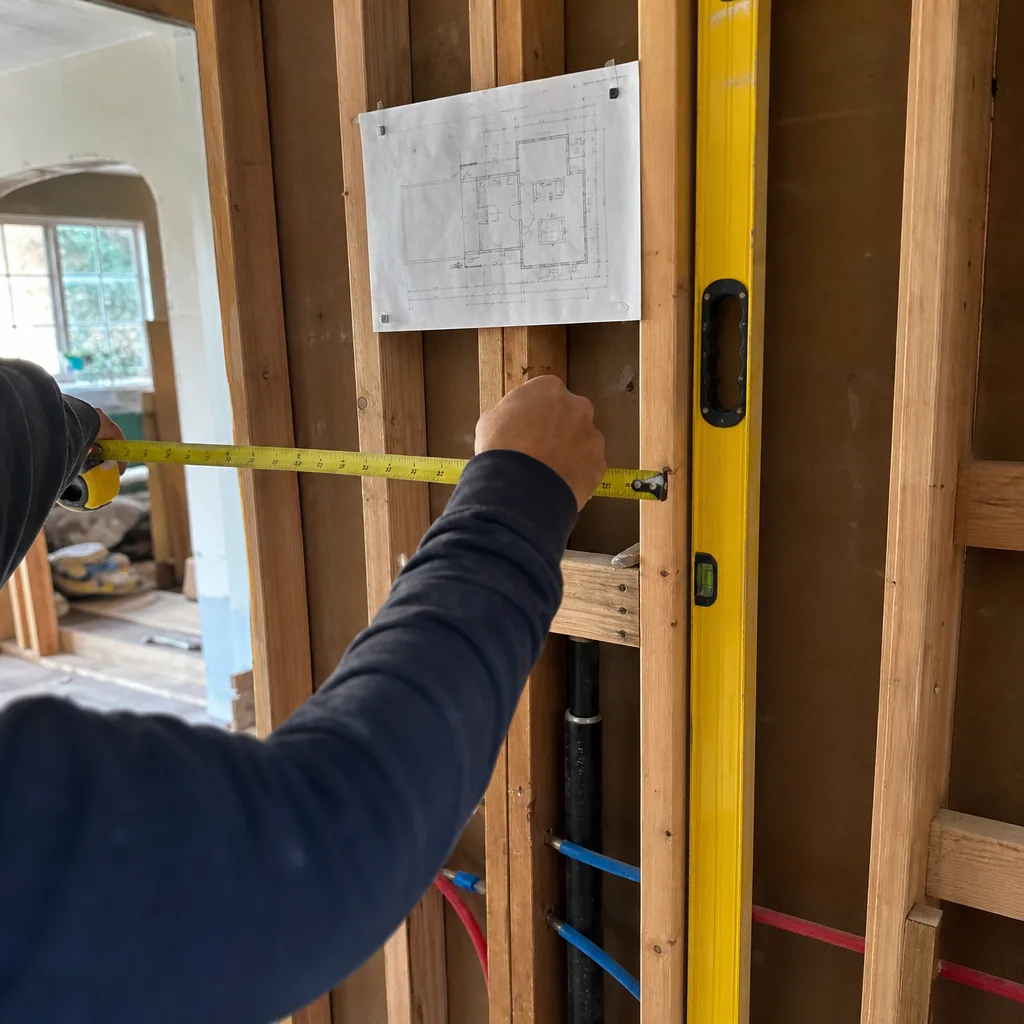
Most Long Beach owners discover a failing Unilock fence section the same way: a panel has shifted after a winter rain, a gate starts dragging across the pavers, or a post wobbles when the kids hang a backpack on it. Unilock systems are modular, which is good news for repairs, because a single damaged base panel or post usually doesn’t require tearing out the whole run. The bad news is that the concrete base panels are heavy, and leveling them on Long Beach’s sandy, shifting soil takes a crew that knows how to compact and set a footing properly. We do this work regularly, and Graham Stein, our owner at Elmstead Remodeling Long Beach, still walks every Unilock fence job himself before the crew starts, measuring the existing panel spacing and checking which direction the fence has drifted.
Which Unilock Models This Applies To
Unilock’s fence and screening systems are built around a few recurring product lines, and the installation method differs more by post type than by the exact panel style. The common denominators on Long Beach properties are the Estate Wall and Lineo Dimensional Stone systems, which use vertically stacked concrete panels slotted into matching posts, often with aluminum fence inserts or lattice screens. Some newer installs use the U-Cara Multi-Face panels, which are thinner and designed to clip onto a rail system rather than stack like block. These are not interchangeable with the older Estate Wall panels, and a homeowner who orders the wrong panel online usually finds out the hard way when the lip doesn’t seat into the post channel.
The part that fails first on Unilock fences in Long Beach is almost always the post cap or the post base leveling pad. Coastal air accelerates corrosion on the metal post inserts, and the freeze-thaw cycle is not the issue here the way it is inland; it’s the salt fog and the irrigation overspray that eats the fasteners and loosens the post-to-panel fit. We match both OEM Unilock panels and quality aftermarket equivalents that share the same channel dimensions. For a homeowner who wants the exact manufacturer match in color and texture, we order from Unilock’s current distribution network. For a repair where color matching is less critical, such as a rear property line hidden by landscaping, an aftermarket panel often saves 20 to 30 percent with no functional difference.
Styles & brands we work with






Signs Your Unilock Fence Installation Is Failing
- A gate that drags or won’t latch. The hinge post has usually settled or rotated. On Long Beach’s loamy sand, even a well-built post can shift if the base wasn’t compacted in lifts or if sprinkler runoff has been washing against it. The fix is re-setting the post and re-hanging the gate, not shaving the gate bottom.
- A panel that rocks when you push on it. This means the tongue-and-groove connection between panel and post has worn, or the panel was never fully seated. Unilock panels are heavy, and a rocking panel is a warning that the whole section is losing structural grip.
- Cracks running vertically through the lower third of a base panel. This is almost always a drainage problem. Water pools at the panel base, the soil swells, and the trapped moisture eventually cracks the concrete. We see this most often along side yards in Naples and Belmont Shore where downspouts empty too close to the fence line.
- Rust staining below the post caps. The galvanized or powder-coated steel post insert is corroding. If you catch it early, the cap and insert can be replaced without touching the panel. If it’s ignored, the post eventually fails and the entire section needs rebuilding.
- A visible lean of more than a half-inch per four feet of height. Unilock fences don’t lean gradually the way a wood fence does. When they lean, the footing has failed or the base course was never leveled correctly. In Long Beach, a lean usually shows up within the first two years if the footing was undersized.
See the difference
 Before
 After
After Before
 After
After Before
 After
AfterReplacement Cost & What’s Included
For a full Unilock fence installation in Long Beach, plan on $3,500 to $9,000, with most mid-sized yards in neighborhoods like Los Altos or Bixby Knolls landing around $5,500 to $6,800 for a 50 to 70 linear foot run with one gate. The spread comes down to three things: the panel style, the post spacing, and whether we’re building on virgin soil or pulling out an old fence first. A partial repair, such as replacing two posts and three base panels, typically runs $1,200 to $3,800 including haul-away of the broken sections.
Every quote we write for Unilock fence work includes the parts, the labor, the concrete and compaction for the footings, and the cleanup. We write the price down before a single tool comes off the truck. If we hit a buried irrigation line or a root mass that changes the footing plan, we stop and show you what we found before adjusting anything. No change orders that appear out of nowhere at the end of the job.
DIY or Call Us?
There are things an owner can safely check: look for standing water at the panel bases, wiggle each post by hand, watch the gate swing, and photograph any cracks so you can track whether they’re spreading. That’s genuinely useful information for us to have before we show up.
What we don’t recommend is DIY-ing the actual panel or post replacement. Unilock base panels run 60 to 80 pounds each, and setting them requires a dead-flat footing, a proper compaction layer, and usually a second person for alignment. A dropped panel doesn’t just crack; it can crush fingers or toes. The same goes for re-setting a post; if the hole isn’t clean, the new post will be leaning again before the next rainy season. We’re happy to walk you through what we find, but the heavy lifting and the leveling should be a crew’s job. Call us at (562) 512-7086 if you want an honest read on whether that crack is cosmetic or structural. Estimates are free.
FAQs
A properly installed Unilock fence should last 25 to 35 years in the Long Beach climate, though the post caps and metal inserts usually need attention by year 15. The panels themselves are concrete and don’t rot, but the connections and footings are what fail first, especially in coastal areas where salt air works on the hardware. So the answer is: the panel lasts, the hardware needs periodic replacement.
Small surface chips and hairline cracks can often be patched with a concrete repair compound matched to the panel color, if the panel is still seated firmly. Structural cracks or badly spalled panels usually need replacement, because patching a load-bearing panel doesn’t restore its strength. We’ll tell you which category yours falls into before proposing any work, and the price I write down on day one is the price on the invoice when we’re done.
Most partial replacements are done in one day. A full fence run with multiple posts and a gate usually takes two to three days, including footing excavation, compaction, and setting the panels with proper cure time before the gate gets hung. We schedule and work around your household’s rhythm, including quiet hours if there are kids napping or a pet that needs the yard.
We keep a working inventory of the most common post inserts, gate hinges, and leveling pads on hand, and for full panel replacements we order from Unilock’s Southern California distribution network, which usually means one to two weeks for the exact color and texture match. We’re an independent contractor and not affiliated with Unilock, but we’ve been installing their product long enough to know the spec sheets and the channel dimensions cold.
Written by Graham Stein, Owner, Elmstead Remodeling Long Beach, serving Long Beach and nearby areas.


